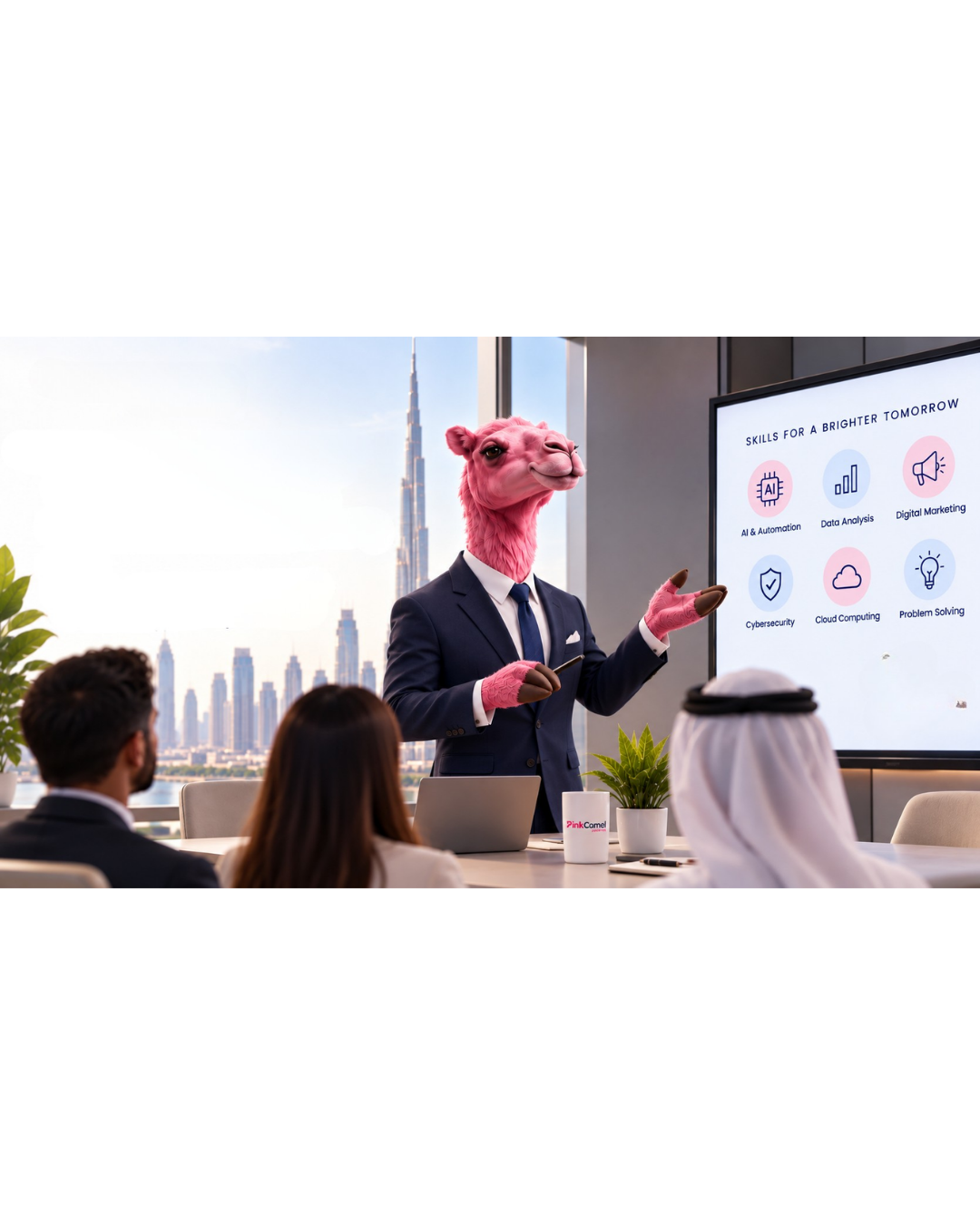
UAE employers are no longer hiring on qualifications alone. Across banking, retail, healthcare, logistics, and professional services, recruiters are screening CVs for a specific set of digital skills before a candidate ever reaches an interview. Knowing what those skills are and how to show them clearly on a CV is now part of a serious job search in the UAE.
Why Are UAE Employer Hiring Criteria Shifting in 2026?
The UAE's push toward a digital economy, backed by initiatives such as the National AI Strategy 2031, has changed what companies expect from new hires. AI, automation, cloud platforms, and data tools have made their way into sectors that weren't considered technical a few years ago, including finance, healthcare, and logistics. Add to that the fact that most employers now run CVs through Applicant Tracking Systems and AI-assisted shortlisting before a human even looks at them, and you get a hiring process built around specific, matchable skills rather than a general sense of experience. Candidates who can demonstrate current, relevant digital capability are simply easier for these systems and the recruiters behind them to say yes to.
The Top Digital Skills UAE Employers Want in 2026
AI and big data, technological literacy, and cybersecurity are among the fastest-growing skill areas in the UAE. Based on current hiring activity, these are the skills employers are consistently prioritizing:
- AI and machine learning literacy
- Data analytics and data-driven decision-making
- Cybersecurity, risk, and compliance awareness
- Cloud computing fundamentals
- Digital marketing and AI-powered marketing tools
- Automation and no-code or low-code tools
- Prompt engineering and AI collaboration skills
Skill-by-Skill Breakdown
AI & Machine Learning Literacy
Most companies aren't hiring AI engineers for every position. Most want staff who understand how AI tools work and how to use them responsibly across marketing, HR, and operations, not just technology teams.
Data Analytics and Data-Driven Decision Making
The ability to read a dashboard, interpret trends, and use data to support a decision is expected in many mid-level roles. Candidates who are comfortable with tools like Power BI tend to have an edge, even when the role isn't officially an analyst position.
Cybersecurity, Risk & Compliance Awareness
Cybersecurity used to sit squarely with the IT department. As UAE organizations become more digitally connected, it's become a business-wide concern, and that shift is especially visible in regulated industries like banking and healthcare.
Cloud Computing Fundamentals
Cloud platforms are now running the backend of most businesses, whether employees notice it or not. Even a basic working knowledge of how cloud systems function can strengthen a candidacy for IT and enterprise technology roles.
Digital Marketing & AI-Powered Marketing Tools
Marketing has changed shape quickly. Employers are looking for people who can pair creative instinct with AI-assisted content tools and digital advertising platforms, and who can back their ideas up with actual performance data rather than just gut feeling.
Automation & No-Code/Low-Code Tools
A lot of repetitive, manual work is being automated using tools that don't require any coding background at all. Professionals who can spot where automation would actually help and set it up without needing a developer are increasingly useful in administrative and finance roles.
Prompt Engineering & AI Collaboration Skills
Getting good, usable output from an AI tool comes down to how well you can ask for it. As AI becomes a regular part of daily work, employers are starting to value people who can write clear prompts and know when to question what the tool gives back, rather than accepting it at face value.
Beyond Technical Skills: The Hybrid Profile Employers Prefer
UAE hiring experts consistently point to one theme heading into 2026: the strongest candidates combine digital skills with human ones. AI fluency paired with critical thinking and data literacy paired with clear communication tend to stand out more than technical skills alone. Employers want people who can interpret what a tool produces and apply it to a real business problem, not just operate the tool itself.
How Are UAE Employers Screening for These Skills?
Most UAE employers now use Applicant Tracking Systems to filter CVs before a recruiter sees them. A few factors tend to decide whether a CV makes it through that first filter:
- Keyword matching: The system scans for skills and terms that line up with the job description. If you have a skill but haven't named it clearly, it often won't register at all.
- Formatting and structure: Tables, columns, graphics, and unusual headers are common traps. ATS software can misread them or skip those sections altogether.
- Job title and role alignment: Job titles matter almost as much as the skills list. The system checks how closely past titles and experience line up with the role being applied for.
- Where the skill sits on the page: A skill mentioned once inside a long paragraph rarely carries the same weight as one sitting clearly in a dedicated skills section or tied to a real achievement.
- What happens after the filter: Once a CV clears the ATS, a recruiter is usually scanning it for a matter of seconds, so skills still need to be easy to spot at a glance.
Turn These Skills Into an Interview-Ready CV
Knowing which digital skills matter is only the first step. The next is making sure your Dubai-style CV reflects them in a way that gets past ATS filters and in front of a recruiter.
CV ATS Score: Upload your CV and see how it performs against the same checks that GCC employers' ATS software runs. You'll get an instant score along with a breakdown of exactly what's holding it back.
CV Rewriting: If the issues go beyond a quick fix, a GCC CV expert will rewrite your CV from scratch, built around your target role. Here's what that includes:
- Guaranteed ATS score of 95%+: Your rewritten CV is built specifically to get past the same filters that quietly reject most applications. That's a number you can check, not just a promise that it "reads better."
- Rewritten by a GCC CV Expert: Whoever works on your CV knows how UAE and wider GCC recruiters actually read applications, so what you get back reflects real regional hiring habits, not a template copied off a random website.
- ATS-optimized design and formatting: The layout is built to parse cleanly through ATS software while still looking sharp to a human reader, steering clear of the tables, columns, and headers that commonly cause parsing errors.
Start by checking your CV's ATS score, then explore Pink Camel Jobsite for job listings across the UAE and the wider GCC, along with additional jobseeker services such as career consultation calls and CV plans.
FAQs
What digital skills do UAE employers want most in 2026?
AI literacy, data analytics, cybersecurity, and cloud basics come up again and again in current job postings in Dubai. On their own, they're not enough, though; recruiters are pairing them with communication and critical thinking before they take real interest.
Is AI literacy required for non-tech jobs in the UAE in 2026?
Usually, yes. Even in marketing, HR, or operations, staff are now expected to use AI tools sensibly as part of the job, not as an optional extra.
What skills do UAE recruiters screen for on a CV before an interview?
Role-specific keywords, measurable achievements, and digital skills that match the job description closely. This applies to both the ATS software doing the first pass and the recruiter reading it afterward.
Which industries in the UAE are hiring for digital skills in 2026?
Banking and healthcare are hiring the hardest for this right now, with logistics, retail, and government roles close behind.
Do UAE employers use ATS (Applicant Tracking Systems) to screen CVs?
Yes. Most CVs sent to UAE and wider GCC employers pass through an ATS first, so formatting and keyword matching directly affect whether a CV reaches a recruiter.